
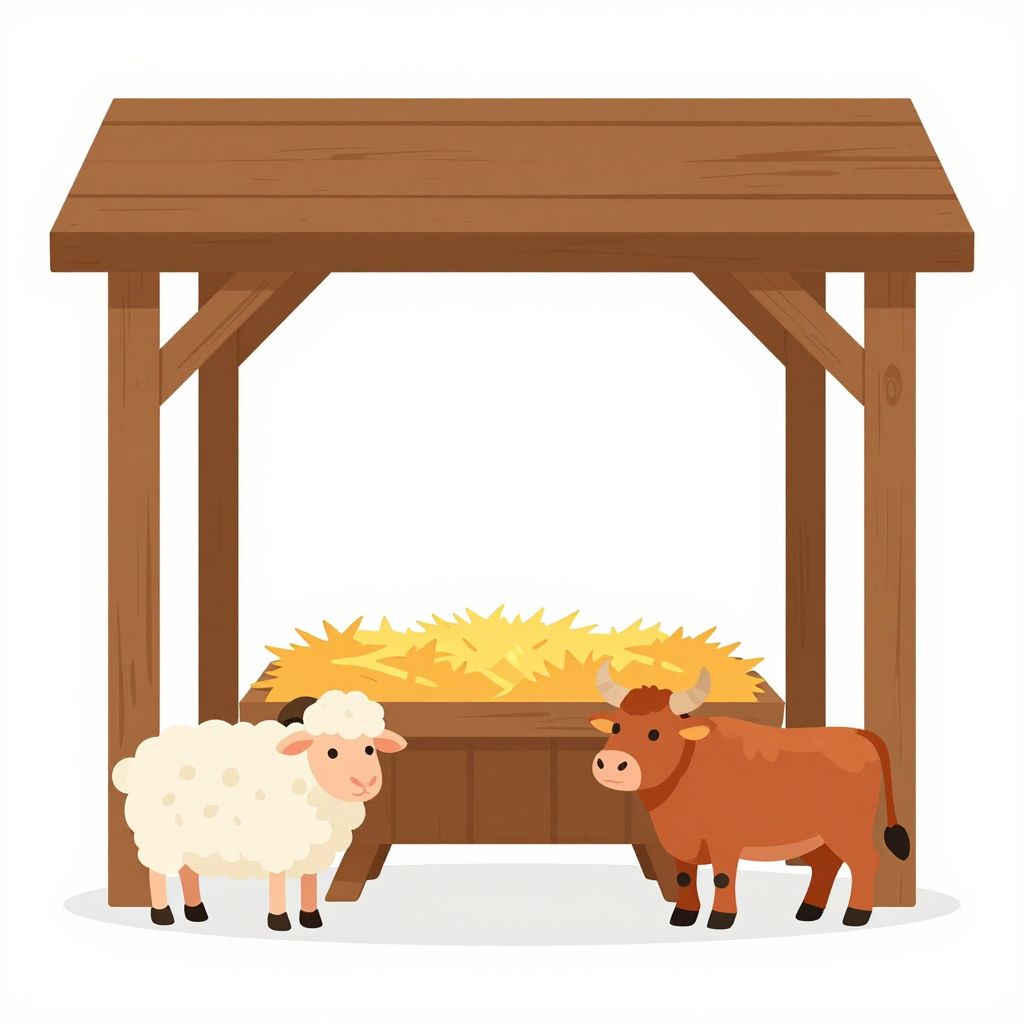
Have you ever wondered why a manger became such a central part of the Christmas story? This humble feeding trough, often portrayed in nativity scenes, holds profound spiritual significance beyond its simplicity. As we explore its biblical roots, we reveal insights about God’s intentions and the representative nature of the manger.
The term “manger” appears prominently in the story of Jesus’ birth. Understanding its meaning provides clarity on God’s character and highlights the extraordinary nature of His entrance into our world. The manger symbolizes humility, provision, and divine love.
What Is A Manger In The Bible?
A manger is primarily a feeding trough for animals mentioned in the Bible, particularly in the story of Jesus’ birth found in Luke 2:7. Mary laid Jesus in a manger due to a lack of accommodation, marking a significant moment that symbolizes God’s intent to reach humanity in the most humble way.
The Biblical Context of the Manger
The Bible highlights various aspects of a manger. In ancient times, mangers served as a basic means of providing food to livestock. They were typically made of wood or stone and located in stables where animals lived. The instance in Luke emphasizes the simplicity and modesty of Jesus’ birth.
In Luke 2:7 (NIV), it reads, “And she gave birth to her firstborn, a son. She wrapped him in cloths and placed him in a manger because there was no guest room available for them.” This scenario sets a stage rich in meaning, reflecting the character of Jesus and the nature of His arrival.
The location of the manger plays a significant role in the narrative. It was most likely in a cave or stable that housed animals, emphasizing the humble beginnings of the Son of God. This location contrasts sharply with worldly expectations of greatness.
Have you ever felt overlooked or insignificant? The manger invites the consideration that God often operates outside societal norms. His choice to place Jesus in a manger reflects His desire to demonstrate that His kingdom is for everyone, especially the lowly and downtrodden.
The act of laying Jesus in a manger serves as a profound metaphor. This feeding trough symbolizes nourishment and provision, suggesting that Jesus is the Bread of Life (John 6:35). Through His birth in such an ordinary setting, God highlights the essential nature of the Gospel.
Jesus being laid in a manger signifies that He comes to nourish spiritual hunger and provide sustenance for our souls. In every feeding trough, we can recognize God’s desire to feed us with His presence and grace.
Mary’s response to placing Jesus in a manger highlights a faith-filled acceptance of God’s plan. Her willingness to embrace such humble circumstances illustrates her trust in God. Mary didn’t focus on the discomfort of her surroundings but on the miracle represented by her child.
What can we learn from Mary’s response? Trusting in God often requires humility, surrendering our expectations for His greater purpose. How might this apply to your life today?
The manger isn’t just a backdrop; it symbolizes spiritual truths that extend far beyond its physicality. When we contemplate the implications of the manger, we discover several lessons about God’s character and purpose.
Jesus entered a world filled with expectations of a powerful king, yet He chose the most humble circumstances for His arrival. This act of humility serves as a reminder of how God values the meek and lowly.
Philippians 2:6-7 (NIV) states, “Who, being in very nature God, did not consider equality with God something to be used to his own advantage; rather, he made himself nothing by taking the very nature of a servant, being made in human likeness.” Jesus’ choice to be born in a manger signifies a radical departure from worldly ideals of power and prestige.
The manger is also a powerful symbol of God’s provision. In a world often defined by scarcity, the manger represents God’s abundant grace. As Jesus grows, he reveals Himself as the ultimate provider, fulfilling the needs of humanity. ”
This is echoed in Romans 8:32 (NIV), which says, “He who did not spare his own Son, but gave him up for us all—how will he not also, along with him, graciously give us all things?” The manger stands as a reminder that we can trust God to provide for our deeper spiritual needs and desires.
The scene around the manger also invites all people to come and see. The birth of Jesus is not exclusive; it marks an open invitation to all who seek Him. Shepherds, often seen as outcasts, were the first to receive the announcement of Jesus’ birth, deepening the message that everyone is welcome in His kingdom.
In Luke 2:10-11 (NIV), the angel mentioned, “I bring you good news that will cause great joy for all the people.” This reflects the universal nature of Christ’s message, reminding everyone that they can seek solace and joy in Him.
Every area of inadequacy or need reflects a possibility for divine intervention. God may choose to use the least likely circumstances to showcase His greatness. Consider how He might be inviting you to trust Him amid uncertainty.
The manger reminds us of the invitation to embrace vulnerability. Just as Jesus came to us in vulnerability, so we are called to bring our weaknesses before Him. Paul illustrates this in 2 Corinthians 12:9 (NIV): “But he said to me, ‘My grace is sufficient for you, for my power is made perfect in weakness.’”
Recognizing our need can open pathways for God’s strength to be revealed. What areas of vulnerability have you been hesitant to lay before Him?
The ordinary setting of the manger serves as encouragement to detect the extraordinary action of God in our own lives. Can we recognize God’s hand working in mundane moments?
Often, spiritual growth occurs in overlooked places. Much like the shepherds who found joy in the manger, we can find God in everyday experiences. Remember that the extraordinary can often be hidden within the ordinary.
The humble birth of Jesus in a manger challenges each believer to lead a life that reflects His character. How can you embody the principles of humility and grace that the manger represents?
Generosity reflects the heart of God and brings His kingdom closer to Earth. What is one way you can go above and beyond in showing kindness this week?
The manger stands as a profound reminder of God’s love, humility, and provision. It symbolizes the extraordinary journey of Christ, who came to meet us in our need. As you reflect on the significance of the manger, let it encourage you to trust in God’s plan, express your vulnerabilities, and embrace the ordinary places of your life as venues for His presence.
Take a moment to pray, asking God to help you recognize how He might use your own “manger” for His glory. Seek opportunities to express humility and generosity as you follow in the footsteps of Christ, who came as a humble babe in a manger.
For further exploration into faith-based topics like the significance of Jesus’ birthplace, consider reading more about why Jesus was born in a manger or seek deeper insight in the context of the manger in the Bible.